The Cows · Page 26
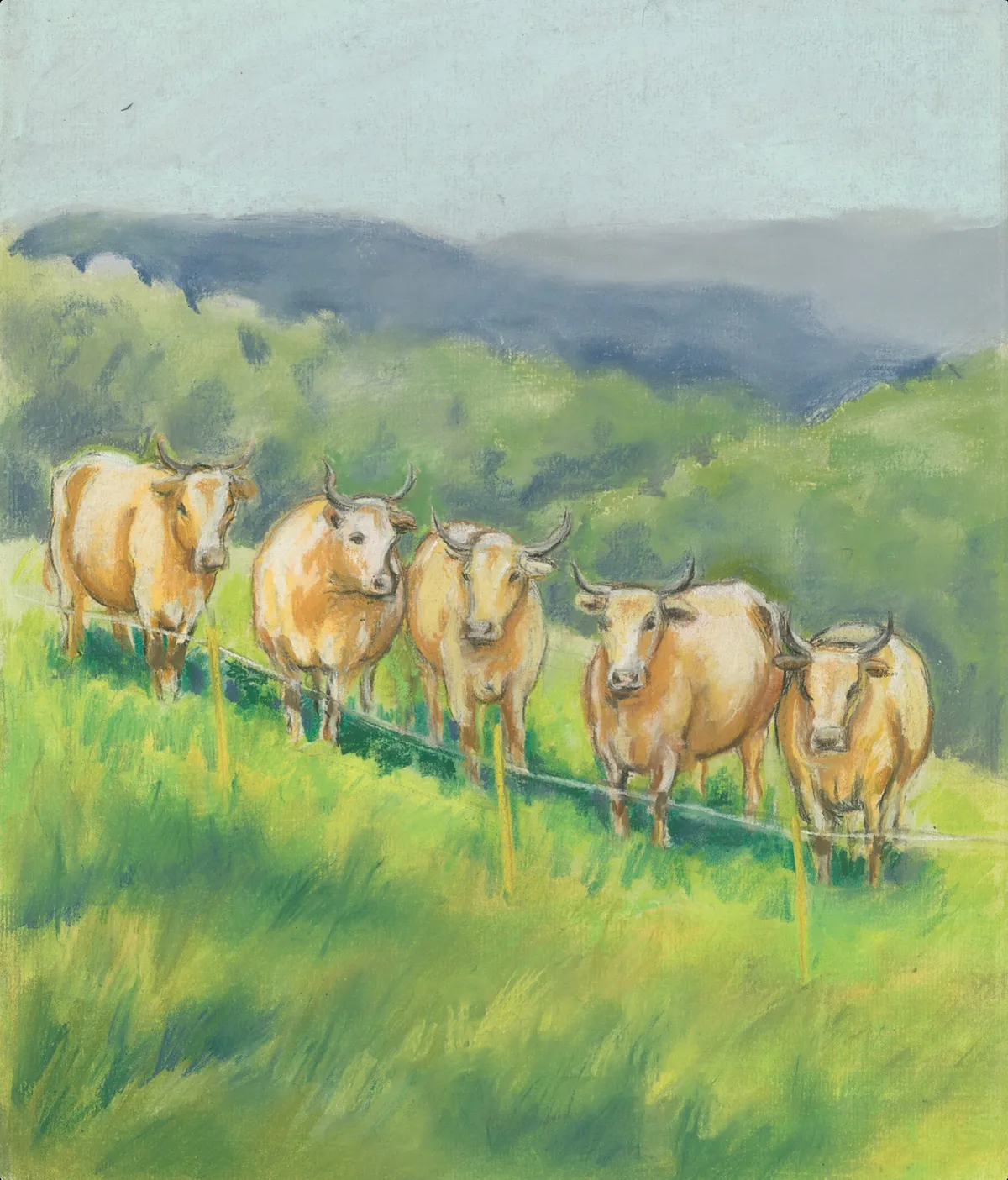
Put us back on the steppes and the dry desert. Move us on through the prairie and the green fields in that elegant dance of the herds and those that feed off of them.
The way grasslands have evolved with large herds of grazing animals is one of the earth’s miracles of cooperation between species.
Grasslands augment their fertility through the activity of bacteria in the soil – that is, they need animals to graze them, trample them and leave their manure behind in order to thrive. They also need the hunters and herders to move them continuously so they do not overgraze and desertify the same landscape.
At their best, humans have imitated this pattern in human landscapes with properly managed paddocks and cellular grazing on farms or by pastoral practices of shepherding animals to different pasture areas.
The importance of moving animals frequently and in the correct densities has only recently been fully understood (thanks to the work of Allan Savory and others on the techniques of holistic management). It is now recognized as critical to the health of the animals, the soil, the grasslands, and us humans!