The Cows · Page 19
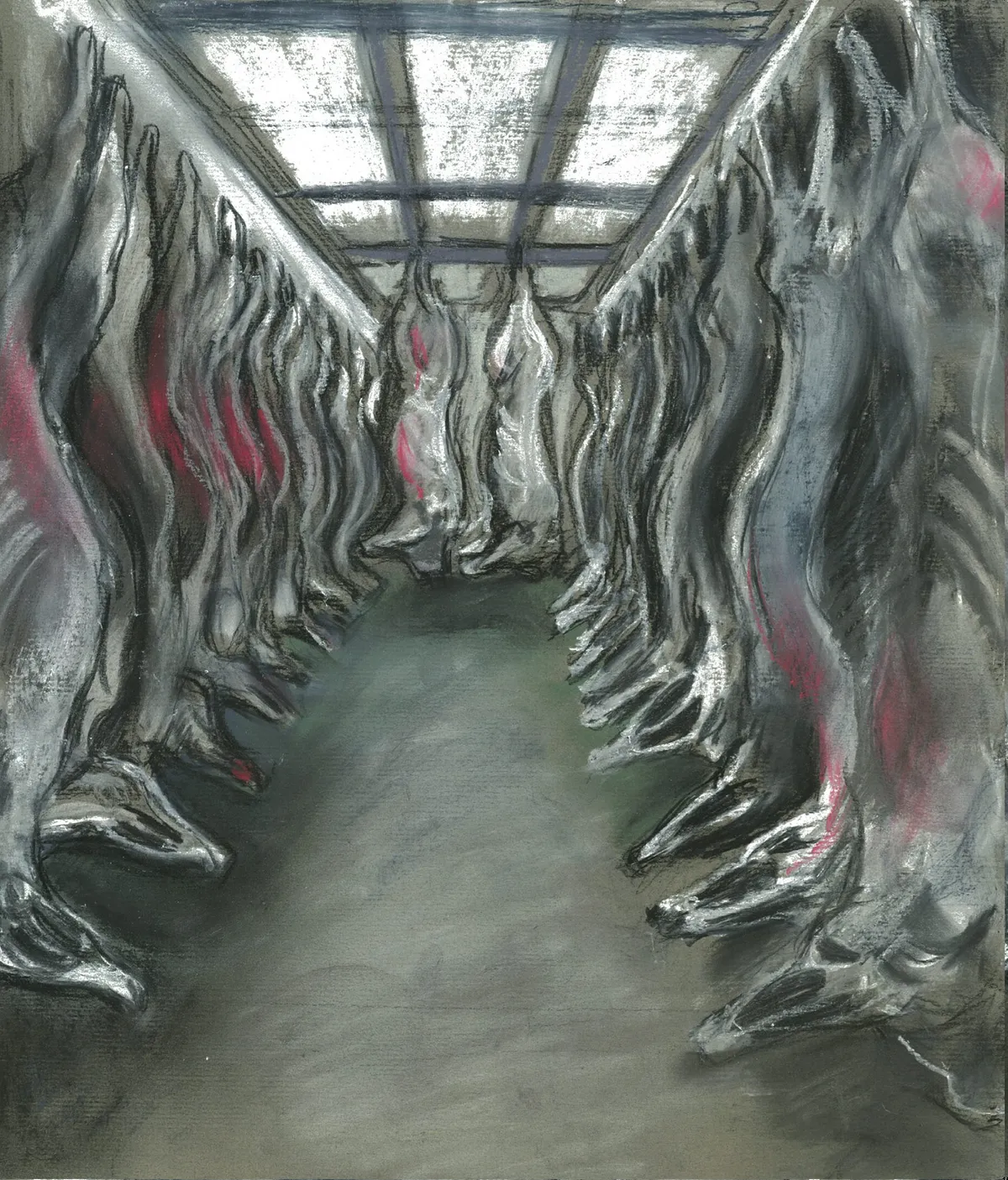
Our meat is no longer clean, and our sacrifice is no longer even the pretense of a sacred act.
Killing animals was once regarded as a sacred act.
Originally this may have been in recognition of them sacrificing their lives to allow humans to survive, as in the case of many First Peoples.
Later, as agricultural societies developed, killing animals became the subject of some ethical questioning. Some have suggested that the religious connotations of ritual sacrifice may have been a way to make killing more acceptable.
Nowadays, the development of the industry has meant that huge numbers of animals are trucked long distances and killed in abattoirs that are more like factories than temples. Personnel rarely undergo adequate training. Animals are not treated as individuals, and often their sensitivities go unrecognized; they also experience fear, panic, and pain. Recent recognition of this has led to the creation of mobile abattoirs that do not require transporting animals away from their known environment and more humane killing practices, such as those developed by Dr. Temple Grandin, that allow for less stress and pain before the butchering process.
Meat from conventional agricultural sources is becoming a dangerous food source these days as these synthetically produced chemical pollutants that cannot be eliminated end up in organisms at the top of the food chain. If the cow has eaten chemically grown food or been treated with systemics, these substances will accumulate in the meat and the bodies of all those who eat that meat! This is a kind of chemical time bomb that has yet to explode, and no one quite knows (although we can imagine) what the effect of generations of accumulated toxins is going to be on the health of the human race.
Systemics, which most domestic animals are given these days to reduce internal and external parasites, are excreted in animal manure. These chemicals kill insects that live off the manure, including bees and dung beetles. The job of many of these insects is to break down the manure so that it can enrich the soil again. Not only is the soil life destroyed in this process, but over time, we are selecting stronger, more resistant parasites and weaker, less resistant animals.