The Cows · Page 17
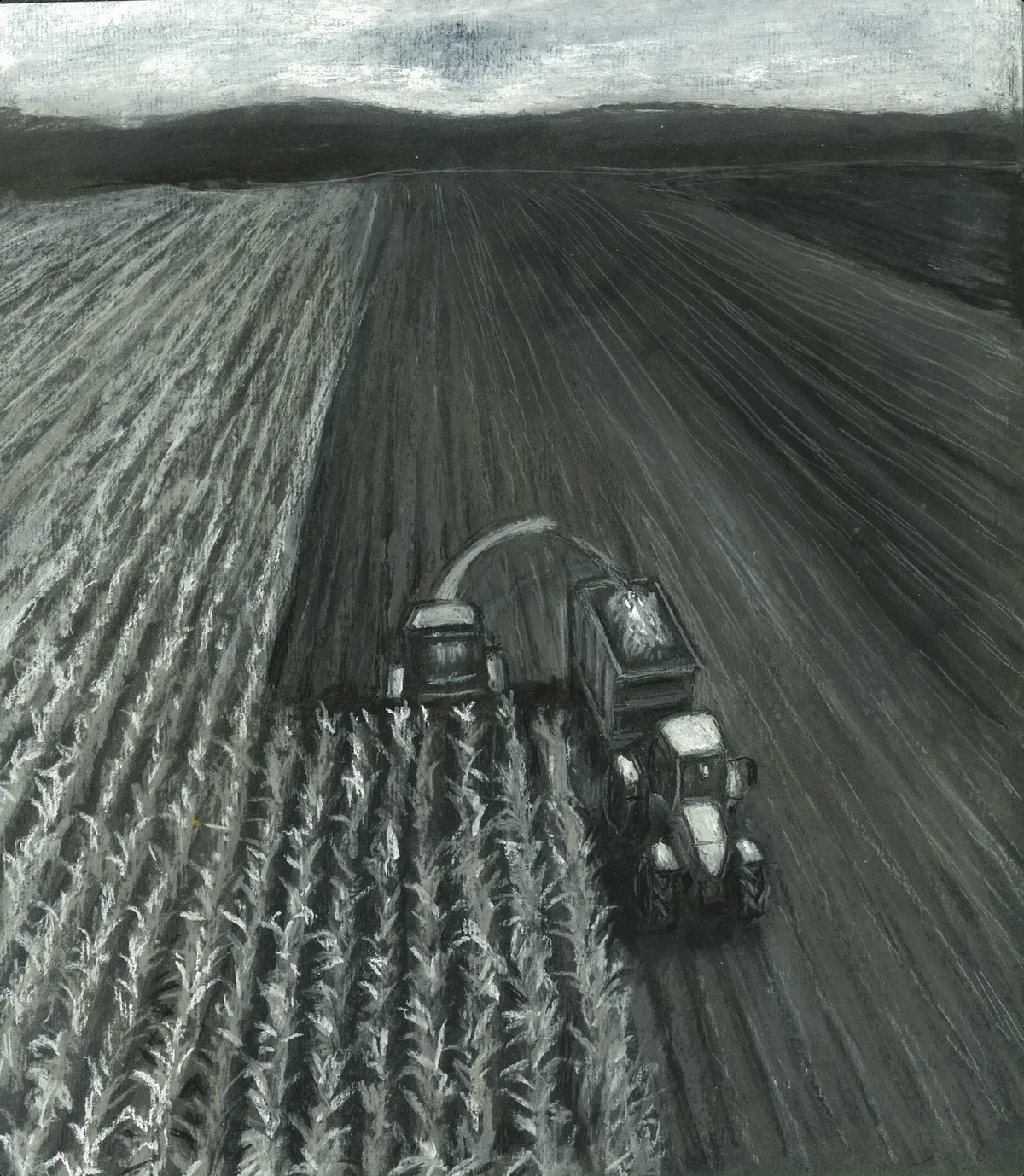
Where we are no longer allowed to forage the grasses and fragrant herbs, men till great surfaces of bare soil to grow crops to feed us.
That food is not what we were designed to eat, and we cannot digest it.
The past century has seen diminishing numbers of farms and a significant increase in the demand for animal products.
Simplifying the production chain has meant keeping dairy cows in enclosed buildings on concrete floors where machines can milk them every time they have enough milk.
Likewise, beef cattle are often kept in feedlots or feed stalls where they are given high-energy food (foods that create indigestion).
In either case, these conditions are not suited to their needs.
The cattle are routinely given antibiotics to accelerate their growth and fend off increasingly rampant diseases due to overcrowding and incorrect nutrition. These antibiotics end up in the food web and contribute to bacterial virulence as the bacteria soon learn to adapt. The more this goes on, the less antibiotics can protect cows or humans from life-and-death situations.